Friday, November 30, 2012

The Desert and the River (part 2)

"Run!" I implore them, "Go as fast and as far as you can. Do not look back. Just run. Do you see those rocks, way over there? Run to them, touch them, and then come back and tell me what you saw. Or don't come back until the sun is setting and the smell of dinner grilling reaches you on a breeze. Go and follow the curve of the Earth until all I can see are the tops of your heads racing across the sand. Go."

At first it is difficult for the girls to believe that they are free. They have been tethered to us on such short lines these last few months. "Don't touch that. Come closer. Hold my hand. Look out for cars. Watch your step." We are all conditioned to the city, always fighting and flying - looking both ways before crossing every one way street. We are jumpy, hyper alert and flinching at the sound of car horns. But this is the desert and we have left the daily rules and frustrations of society behind in the city.

And then a scarab emerges from a tiny hole in the desert and they are off, chasing the bug on all fours - clambering to grab it and feel the tickle of six little legs, teasingly putting it on each others' backs. We are all laughing as they kick up sand, scampering around with their new toy. They play like puppies, tumbling and rolling. They play like children should.

I try to help our bedoin guides put up the brightly printed canvas wind break. They smile and humor me, allowing me to uselessly hold up a corner post while they neatly hammer stakes into the sand, fasten ropes against the wind. They are a father and son team, quiet and calm - proud in the subdued manner of the vast western desert. A smile between them tells me that they have everything under control, that they have been doing this for a thousand years.

I sit back against a white chalk boulder and breathe, attempting to comprehend the vastness. This desert flows across the great sand sea, across Libya and the seemingly endless Sahara to the Atlantic Ocean. It is too huge for me wrap my head around. Eventually I relax into the realization that I don't need to understand it, to grasp it or own it. My thoughts retract to the enormous glowing monoliths that jut out of the desert floor haphazardly, and closer still to my breath that is finally calm and even for the first time in months.

Our guides have been cordial, if slightly remote. Mina cements the relationship when she explains to them in gestures that we don't want to sleep in the provided tents. She lays out our familiar pallet of blankets and sleeping bags on the sand as the sun sets and the first stars appear on the eastern horizon. She helps build the fire and insists on heating pumpkin seeds on rocks beside the grill. She is in heaven, useful and competent. She glows with the confidence of a person who has broken the language barrier, communicating fluently with her actions. She is furious with me when I share a sheesha with her bedoin friends. Luci quietly busies herself just being Luci.

Our guides never stop feeding us - bread, slow cooked fava beans (fuul), tomatoes, carefully grilled chicken, and tea. The making and drinking of tea is a ritual of highly practiced motions. Small shot glasses and a steel kettle are unwrapped from a soft cloth every few hours. Water is poured and poured again over gunpowder tea, sampled and distributed. The tea is brewed brutally strong and sweet with small mint leaves delicately floating in the potion.

Night falls and the foxes emerge from the desert. This is the moment the girls have been waiting for. We have been observing their tiny prints in the sand, seemingly trotting from nowhere to nowhere with obvious purpose. They come in close to the fire, searching for scraps. The bemused looks on the faces of our guides tells me that these are the racoons of the deserts - fearless scavengers who are waiting until our guard is down to steal our food, to tear into anything that has not been carefully stored - sand colored varmints with burning eyes and enormous ears.

Jenn and the kids fall asleep, exhausted and contented. I am tired but not ready for sleep. Mars glows orange on the eastern horizon. I lay awake for hours, back on the sand, eyes in the sky. For the first time in my life I can actually feel the Earth slowly rolling eastward. I am riding it, flat on my back watching the horizon drop farther and farther away from Mars. I drift into sleep and I dream that I am in an enormous desert on a glorious planet breathing fresh air as a fox slips in close to steal my breakfast.

Monday, October 29, 2012

Pressure

"So do you understand what these numbers mean?"

"Clearly doctor," I replied. "Cairo is now officially killing me."

It is no longer simply a metaphor. I knew Cairo was frustrating, annoying, often agitating - but deadly?

I went to see the school nurse two weeks ago. My daughter had contracted a strange, but not particularly dangerous virus called hand, foot, and mouth disease (not the cow one). She had a sore throat, low fever, and a nasty rash on her hands and feet. The disease is quite contagious. So she was at home, supposedly resting while the virus ran its course. I went to work, but I wasn't feeling so hot myself - run down, depressed, exhausted. The nurse looked at me and told me to sit down. She wanted to take my blood pressure. It was high. She told me to come back and have it checked the next day.

The next day it was still high. And the next. Appointments were made. Blood work was ordered. Damn, I hate needles.

 She sent me to the doctor; the same doctor who nine months ago told me that I was surprisingly healthy and would be even healthier if I drank red wine, cooked with olive oil, exercised more, and dropped a few kilos. I have been remarkably compliant in matters of red wine and olive oil consumption.

Apparently that wasn't enough.

It seems that both my blood pressure and cholesterol have moved up the charts from, "Drink red wine and try to get a little more exercise," to, "Take these pills every day for the rest of your life and dramatically change your lifestyle." 

"So, have you been eating a large amount of beef?"

"No. Not really. I do eat entirely too much bread." Ironically, my pork consumption has also increased while living in Egypt. There is this great little Coptic store nearby that sells hand cut bacon. Also, I tend to binge on sausage and ham when we go for Friday morning brunches at the US embassy club house. It has been a delicious way to feel slightly subversive, a scrumptious and subtle protest against my life in Cairo. Now my bad cholesterol is up, good cholesterol down. I suppose Allah always gets the last laugh.

"What do you do to relax? Do you exercise much?"

"Mostly I brood and sweat as if I were exercising without actually doing any excercise. Do those count?"

It is hard for me to relax here, hard to exercise. My favorite things to do are to walk and swim. The streets are loud and chaotic, a little dangerous and uncomfortable for strolling. Swimming, the kind I like to do, is out of the question. Though I feel a sense of peace when I am near the Nile, I am rarely tempted to jump in for a swim.

In Texas I was stressed. My job was actually more insane and I was a regular at at least half a dozen local TexMex joints. I probably should have been in much worse shape than I am now. But in Texas I had outlets. I could walk for hours without hearing a single car horn, without quickly jumping out of the way of a careening taxi.

But things are looking up. Perhaps I needed a jolt to help me break some of my bad habits. I have replaced the daily lemon squishies and thick, melted mozerella sandwiches with raw veggies and cool, refreshing water. Breakfast now consists of only one (albeit large and strong) cup of coffee and a small bowl of muesli with honey. I am taking my pills. The doctor says that if I can get this under control quickly, I may not even need to take the dreaded pills forever. I have already lost some weight, my pants loosening after just two weeks.

But I know what really kept me relatively sane and healthy before I came to Cairo, and what will restore me upon my return home. It was the river that washed away the daily madness. I realize now that I am destined to be one of those crazy old people who wake up at the crack of dawn in any kind of weather, pull my swim trunks up too high, mount an old cruiser bike, and peddle down to the place where water magically pours from the ground. I will pause for a moment, take a deep breath, and serenly dive into the cold, inviting river that seems to make everything in this crazy life just a little better.


Saturday, October 13, 2012

When I Grow Up...

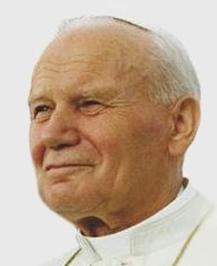
When I was eight years old I wanted to be the pope. There was a priest at our church, Father Lagezi, who delighted in weaving jokes into his weekly homily. Sometimes he was quite funny. Other times, not so much. But regardless of the quality of the humor, the congregation laughed at every punchline. I figured that if a simple parish priest could garner that kind of power, the pope could say almost anything even slightly amusing and sit back, self assuredly listening to the multitudes chuckle.

But time passed and I moved on to other ideas. It wasn't the incredible improbability of ever becoming the pope so much as the intensity of the vows that dissuaded me from my lofty goal. So, if not the pope, what would I be when I grew up? I toyed with possibilities without committing to anything. At times I wanted to be a journalist, a cartoonist, a bartender, an orator, a gentleman farmer, a feluca pilot, and an international man of leisure, among other things.

A month before I graduated from college with a vague and immediately useless degree in Communication and English, Jenn bought me a homebrewing kit. I made my first batch of beer. It was terrible and so I made another. The second time it was not so terrible. A few more batches and the stuff was becoming delicious. Suddenly I knew what I wanted to be when I grew up. Remember that this was in the early days of the micro brewing revolution. There were still more NBA players in this country than professional brewers. The very first brewpubs in Austin were just starting to open. So I bottled a couple of batches of beer, printed my resume onto labels, and started knocking on the doors of these new breweries. I did not get a job on the first round. There were already too many ambitious homebrewers and too few breweries to employ us all. Still, I told myself that somebody had to be a starting forward in the NBA. Why couldn't it be me? I went back again and again.

While I had struck out with the first generation of brewpubs, my persistence paid off. I picked up a job at Austin Homebrew, which morphed into a brewing job at what may well be the coolest bar in the known universe - Lovejoys. It was a fantastic job and I worked there for four years. My boss, Chip, was great. He told me to make whatever I wanted. And so I did. Some of it was pretty good. I loved the artistic freedom of brewing small batches of craft beer for an eager and open minded clientele. Eventually the desire to move on and my waning interest in the science of brewing overcame me and I didn't want to be a brewer when I grew up anymore. Or maybe I just wanted to grow up again.

I started teaching because I heard that I could find a job in Mexico as an English teacher. I had never wanted to be a teacher. I never even wanted to step inside another school after graduating. I often ask myself now if I would be back in school if I had paid more attention the first time around. If I didn't want to be a teacher, I really never wanted to be a behavior specialist. But I am good with kids and for whatever reason, I have an ability to talk people down when they are about to do something stupid or dangerous - a talent that is sadly in high demand in American public schools.

A minor nervous breakdown and a lucky(?) break landed me a teaching job at an unnamed international school in Cairo. The job is OK but I'm tired of the stress and sick of the city. My blood pressure has become a clinically significant problem and I am increasingly asking myself, "What do I want to be when I grow up?" Last week I tendered my resignation and have until the end of this school year to reinvent myself and perhaps grow up a little.

I was discussing the prospect of growing up and moving forward with a colleague and told him that what I really want to do is this - write. I told him I want to be an essayist, or what the kids today are calling a blogger.
"People make a living writing essays." I naively told him.
"Sure, five people do." He replied
At first I was crestfallen. It is true that in a world where everyone is giving away milk, it is no easy feat to sell a cow. But then I thought about the five people who are doing it and about NBA players and how I was once a twenty-five year old hobbyist, pounding the street with a six pack of homebrew under my arm, knowing beyond any doubt that what was in my bottles was worth buying.


Thursday, September 20, 2012

Acclimation

It is not a long walk to the school where I work, just a few blocks. I leave early, while the traffic is still relatively calm and before the cruel sun has risen over the jungle of dusty six story buildings that spread east to the Moqattam hills. But it is hot already. By the time I arrive at work my forehead is pouring, my shirt soaked. As Ra begins his daily journey across the sky, I settle into another day of moist discomfort.

You have to know that I am not talking about a little bit of sweat - dark, damp circles on my shirt beneath the arms. That is typical. My case is more severe. My head sweats. The backs of my knees, my belly, chest, and even my buttocks are not immune to the daily drenching.

This summer, while back in Texas, I ran into a girl who had been in my kindergarten class four years ago. It is normally a joy to see former students. Although I was not a very good kinder teacher, I humor myself with the belief that I might have imparted something meaningful and long lasting upon the lives of the kids I taught - that they would have something special to carry with them that they learned in our class. I said hello to her and her mother. "How are you? Are you ready for fourth grade? Have you read any good books this Summer?" The usual stuff. She looked up at me with a quizzical expression, "So, do you still have that sweating problem?" She asked. That's what she remembered? I was stunned and embarrassed, unable to stop myself from quickly jabbing back, "I don't know. Do you still have that impurtenance problem?"
"Huh?"

People tell me that I will acclimate. I respond that I have lived in hot climates for most of my adult life. They look at me with a strange mixture of perplexity and pity. "And you haven't acclimated yet?"
 

Yes, in fact I have acclimated. It's just not particularly pretty or comfortable. Dogs shed their thick coats in the spring. Flowers close petals around delicate blossoms as the sun rises and the heat of the day increases. I sweat. It is remarkably efficient. Despite constant misery, my body temperature rarely rises above 97.2 F.

I have acclimated but not adapted. It took many, many generations of people living and mating happily on cold, rainy islands in the north Atlantic for me to become who I am physically. In context, I am really quite practical, if not beautiful. The thick, furry pelt that covers nearly my entire body ensures that I rarely feel discomfort in the cold. Even my pasty, white skin would be useful for gathering sun light if I were blessed to live in a land that didn't have quite so much.

If I can't change, at least there is hope for my children who were born in Texas. If you believe that, then you fundamentally do not understand natural selection. The best chance for my children is that they might have inherited persperation characteristics from their considerably less sweaty mother. If my moisture traits are dominant, they will suffer as I have.

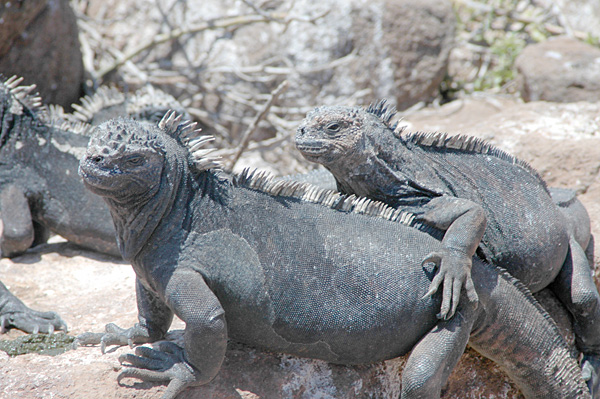
The only way for evolution to work progressively, would be for me to have been so repulsive to the Texas girls I pursued in college that I would have been denied the opportunity to mate and produce viable, sweaty offspring. I would have grown old and died childless, with nothing but undesirable traits to keep me company. But I was crafty. I met Jenn in the dead of winter and courted her on the banks of a cool, spring fed river. We would sit together by the San Marcos that first Summer. Whenever my body temperature rose, I slipped into the water like a Galapagos iguana. She was smitten before she ever realized just how physically repugnant I actually am.

And now I live in Egypt, surrounded by people with dark skin and small, dry pores. I begin each day with a cold shower and then stand, drying myself in front of a small window unit air conditioner. I smear antiperspirant under each arm and across most of my torso and put on a clean shirt, dry for the moment. I gather my things and open the door, stepping out into a new day. I have not even left the porch before the first small drops begin to bead up on my forehead.


Thursday, September 13, 2012

I Like Jesus

 There are plenty of good reasons to like Jesus. For many, it is his simple words of peace and forgiveness that still ring true after two thousand years. Others grasp hopefully to the promise of eternal life in paradise. Some folks just like the beard. While I am drawn to his charisma and message of tolerance, what I love most about Jesus is the virtually limitless material he provided for single panel comics.

It started in second grade at Davinese Boys' school in Beaconsfield. We had to take a class called Scriptures. The format of this class was simple. The teacher would read bible stories to a bunch of squirmy, smart alecky British school boys (and me). We were tasked with listening attentively and then responding with drawings that depicted the stories we had heard. We were like prepubescent monks, illustrating a new, new bible with map pencils and crayons. I was in heaven - not literally, of course.

The cool thing about all of the old bible figures, and Jesus in particular, is that they are easy to draw. They all had beards and wore robes. Notable exceptions are Adam and Eve (but it would be years before I mustered the artistic courage to draw them). Once you have figured out how to make little circles for toes and lines to represent the sandals, all you have left to tackle are the hands. Hands and arms are always tricky. In the bible, they are often raised - whether it be to smite the wicked, raise the dead, or just hoist a glass of freshly vinted wine at a wedding. So, you bend the elbows a little, gap the robes around the wrists, and pray you don't screw up the fingers. A cool trick I learned at Davinese, was that if you dab a little Crayola crimson red on each palm, you have instant stigmata. It is a powerful image that conveniently distracts critical eyes from ungainly fingers.

As a boy, I added some secular touches to my pictures - fish gasping for water in a freshly parted Red Sea or a pair of wookies trying to sneak onto Noah's arc. But this was a private school and we avoided the profane out of self preservation, if not devotion. I grew up, somewhat, but never quit drawing Jesus. For a while I was publishing religious comics in a magazine called The Atheist. More recently Jenn and I launched a line of greeting cards, including a number of birthday/Christmas cards. Though the quality of the drawing has remained pathetically stagnant since grade school days, I like to think that the comics are funny and occasionally insightful.

I particularly like Jesus because I can draw him. I can draw him as a god or a man without fear of reprisal. And I've drawn some pretty offensive cartoon depictions of Jesus. I do so because I believe that Jesus had a sense of humor and that our gods and heroes are only worthy of devotion if they can stand up to fearless questioning while retaining their supposed message of peace. And if we are to be followers of these peaceful gods, we will strive to do likewise.


Peace.

Friday, September 7, 2012

The Desert and the River (part 1)

They say that if you fall into the water, you will emerge covered in unspeakable bacteria. They say that whole villages of people along the Nile have been blinded by parasites from bathing in this water. They say that the sides are the worst and if you must get in the river, do so in the deep and flowing middle section. We step carefully from boat to boat, not wanting to slip and fall between as we board. There are eight of us. There could be as many as twenty, seated comfortably on the cushioned seats of the feluca. We are going for a short outing - a couple hours around the sunset. But I could stay on this river forever, lose myself in the reeds and tiny islands, never returning to the city.

The picnic table is spread with the usual snacks: hummus, nuts, greasy little egg rolls, and cans of beer. Around the table, we recline and chat. If we are lucky, Jenn will actually pick up the guitar that she has been coaxed to bring along. She is timid to play. She doesn't want to be that person - the one who brings a guitar everywhere and monopolizes all attention, playing boring and endless songs. I can't quite convince her that the simple fact that she doesn't want to be 'that person', is proof that she isn't. 'That person' doesn't have a clue. Besides, her songs kick ass and her voice is amazing. She sings, quietly at first. She pauses to watch a pied kingfisher hover over the water for a few moments and then dive for a fish. With a clicking buzz, the bird is gone and Jenn resumes her song.

There is no motor on a feluca, only the soft creaking of timbers pushing gently against the wind and the water. The pilot smiles when I ask him if he has the best job in Cairo.  The feluca has no car horn. And so the pilot communicates with waves and friendly calls to other boats and farmers along the banks. He tacks expertly into the breeze. Mina wants to work the rudder. She pokes me, "Will you help me ask him?" He is grinning, clearly understanding her as she works up the courage to speak to him.

From the middle of this peaceful river, serenely passing islands of tall reeds and small rowboats full of fishermen, it is hard to believe that we are in the middle of Cairo. Just a few hundred yards away the city begins at the banks and sprawls off into the desert on either side. Out there in the city twenty million people are all talking and yelling at the same time. Twenty million people are stuck in traffic, uselessly honking their horns over and over again. Twenty million people throwing garbage on the ground in unison. The city is vibrant and annoying. It assaults and offends, overwhelms people like me - people who crave serenity as much as we need human interaction. But we have options. Though we are tied to the pulsing city through our jobs and apartments, we make these short forays out to find peace. Whenever possible we journey out to the desert or inward to the river. Like the pilot, with his head back and eyes half closed in the breeze, we breathe deeply and slowly, inviting the current to wash away the tension.


Friday, August 31, 2012

Cloud Gazing

At a long and boring faculty meeting, somebody mentioned that people who get into teaching for the summer vacations are doing it for all the wrong reasons. Perhaps I should delete that part from my resume. Although it isn't just the summers off that I enjoy about teaching. It is also the two weeks at Christmas and a week for spring break that inspire me to sign my dreaded contract year after year - to sign my life away to another year of public scrutiny and constant, unrelenting stress. It is a trap. My leg is clamped painfully in its steel jaws, but I am too weary to bother chewing it off to reclaim my freedom.

My brother was a public school teacher. He now works in the private sector. I asked him about how hard it was to give up his summers. He told me that he had worried over this very question constantly before the fuse was lit, while it was burning, up until the moment that his career ended dramatically in a glorious explosion of profanity and threats. He said that now that he is done teaching, he no longer needs summers off. As I look toward a future away from education I am reassured by his words.

Back home in the Texas public schools, people worked very hard - hell, we toiled. There was always too much to do and too little time to do it. We often worked very long days, but we didn't delight in it or boast about it. Sure some folks were driven and inspired. Many were brilliant. But there was an understanding that many of us were just trying to get through the day, the week - counting down days until the next break. There was no shame in that.

People here in the international, private schools are different. There is what strikes me as an oddly competitive attitude about how hard they work and particularly about how many hours it takes. If I tell someone that I came in at 9am on Saturday to get some work finished, she will likely counter with, "Well I came in at seven." If I left at two, she invariably stayed until at least five. It is as though we are in a bidding war over wasted time. When I ask a person what he plans to do on the weekend, he will always make some mention of working at least part of the time. The funny thing is that when I do actually drag my lazy self into school on a weekend to do something that I should have completed weeks ago, I rarely actually see anybody there at all. It seems to be enough just to say you are working - to continually work on the illusion that you are busier than everybody else. If I thought that people were trying to support and inspire one another, I might have some respect this ridiculous game of one upmanship. But it does not feel like that at all.

The same attitude extends to extra curricular activities. I love to take long walks. People here train for marathons. I mentioned to a coworker that I just went swimming. "How many laps did you do?" Probably not as many as you. I don't do laps. I am more manatee than porpoise. Why would I waste valuable water time swimming back and forth over and over again?

As such, I don't really like to tell people what I am doing. I don't want to relate everything to work or to compete about how much of my free time I have spent at school. Jenn suggested that I just say I am working on whatever I am doing... just use the word 'work' in every sentence. This evening I will start by working on eating too much really good Korean food. When I get home, we will work together on finishing off that case of foul tasting Sakkara beer. Then I will work on watching a TV show about teenage vampires. Tomorrow morning I will work with my kids on playing soccer and dig into a project based on Scooby Doo.

If I am inspired to work really hard this weekend,  I will slip away to a quiet place where I can lie on my back in the sand. I will gaze at the heavens and begin the arduous task of finding and identifying images in the clouds as they float past.

Hard at Work